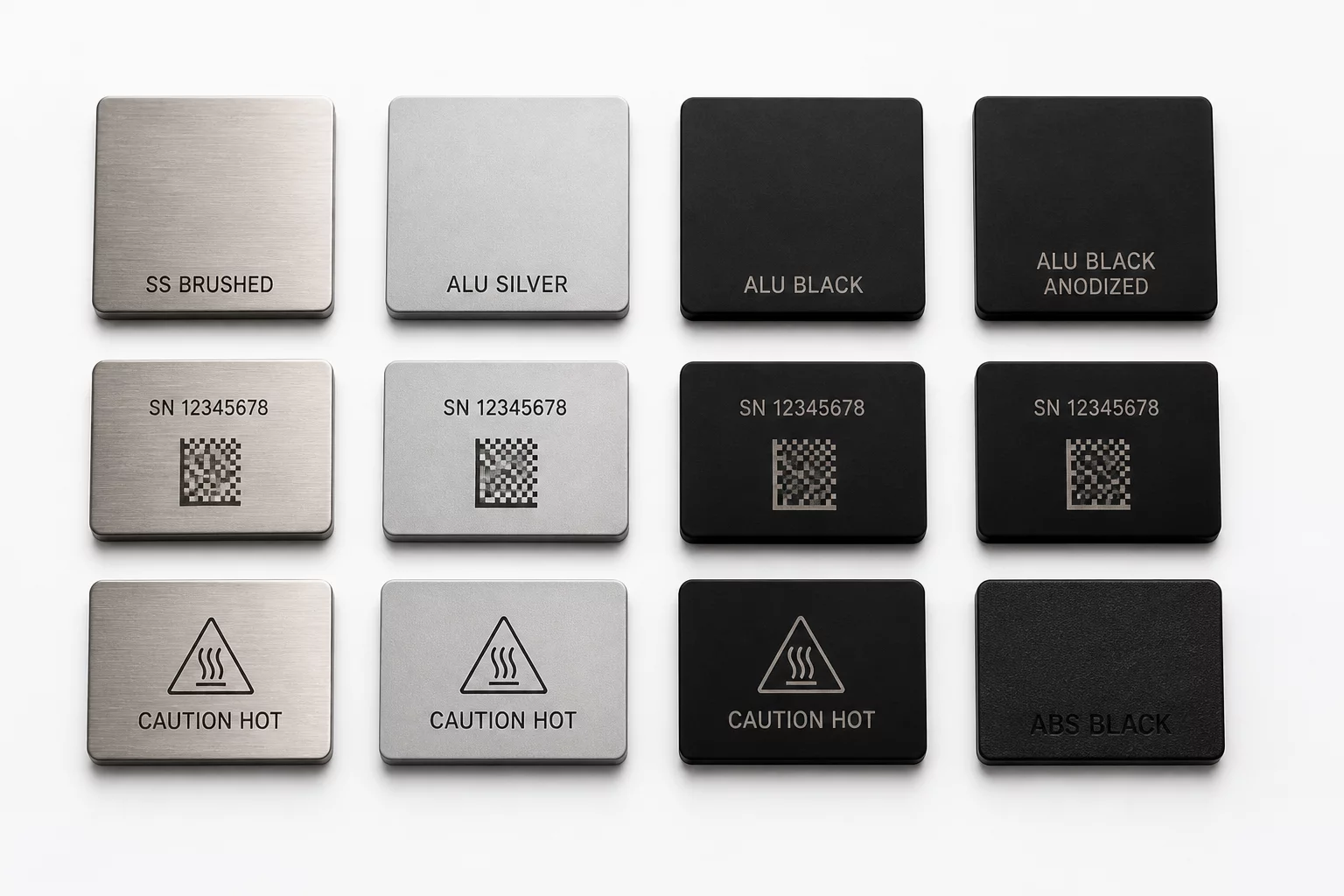
Laser Interaction with Diverse Substrates
Achieving optimal contrast and longevity in industrial marking requires understanding how different laser wavelengths interact with specific materials. Fiber lasers operating at 1064 nm are exceptionally efficient for metals, inducing localized surface melting or controlled chemical oxidation. In contrast, organic substrates like wood and polymers respond far better to the 10.6 µm wavelength of CO2 lasers. The precise energy transfer dictates whether the material undergoes vaporization, engraving, or a chemical color shift.
Wavelength Suitability and Heat Affected Zones
Minimizing thermal stress in delicate assemblies is critical for maintaining mechanical properties. UV lasers utilize high-energy photolytic processes to break molecular bonds without producing substantial heat. This makes them ideal for sensitive thermoplastics and medical-grade materials where micro-cracking must be prevented. Strategic adjustments to pulse frequency and scanning speed allow operators to fine-tune the heat-affected zone for any target substrate.
- Fiber lasers provide extreme contrast and deep etching on titanium and steel.
- CO2 lasers deliver excellent carbonization and engraving depth on wood and acrylic.
- UV lasers offer ultra-precise cold marking on sensitive medical-grade polymers.
No comments yet. Be the first to leave a comment.