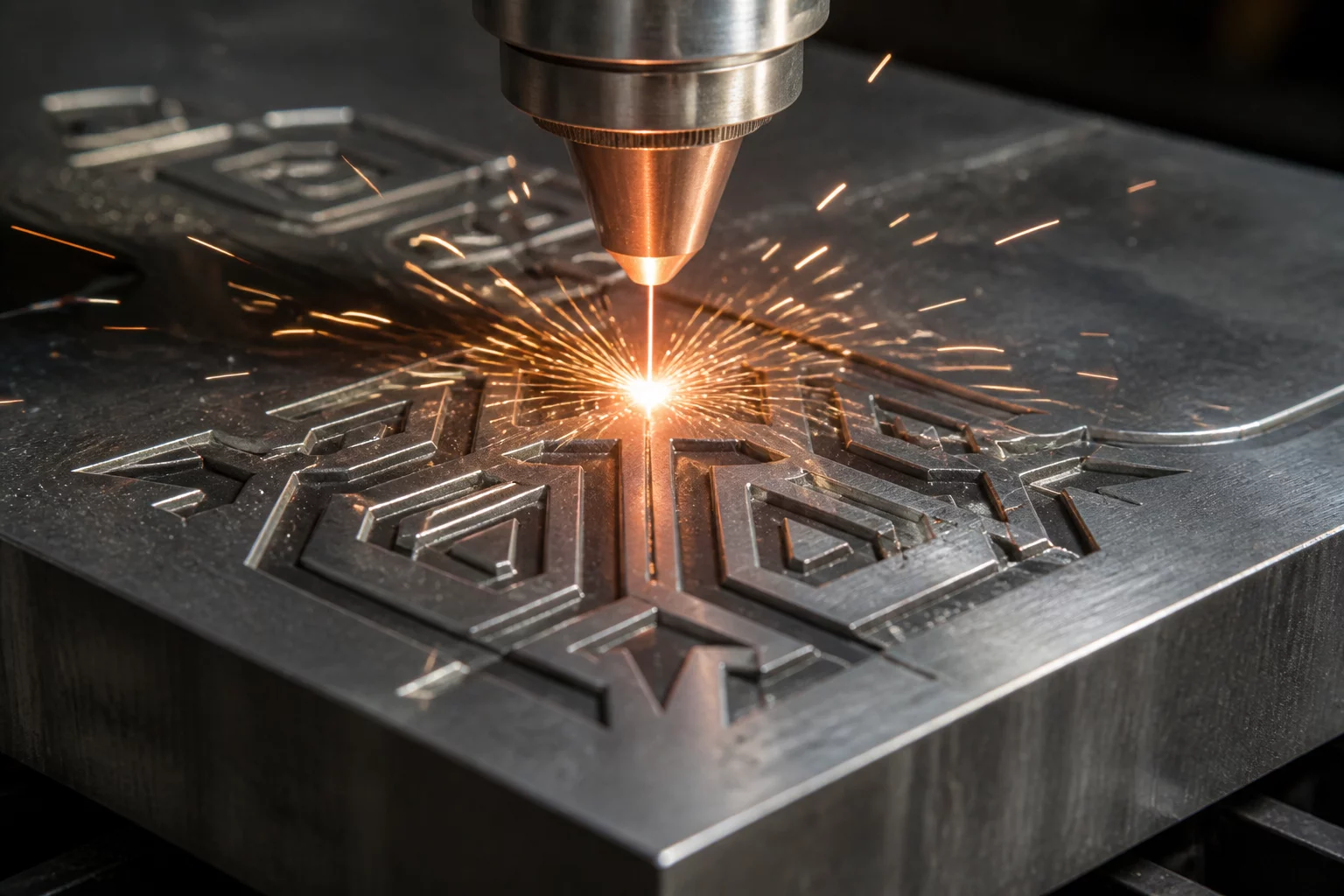
Deciphering Etching and Engraving Mechanisms
Laser marking on metal surfaces operates through distinct thermal processes. Etching melts the top layer of the material, causing micro-explosions and surface swelling that results in high-contrast gray, black, or white marks. The beam modifies the surface roughness without vaporizing significant amounts of metal. Engraving, conversely, employs high peak power to vaporize the material directly, carving deep grooves that resist mechanical wear. Selecting the correct method depends entirely on the component's operational environment and thickness.
Optimizing Frequency and Raster Spacing
To secure reliable results, the relationship between pulse frequency and scan speed must be finely tuned. Excessive thermal build-up leads to micro-cracks and slag formation along the edges. Follow these steps to calibrate your parameters for optimal edge definition:
- Increase the overlap to 60-70% to ensure smooth bottom surfaces inside deep engraved channels.
- Lower the pulse frequency when engraving aluminum to increase single-pulse energy and accelerate material ablation.
- Implement a final low-power polishing pass at high speed to clean oxidation and debris from the marked zone.
This could be your first comment.