Understanding Laser-Material Interactions
Selecting the right laser source depends entirely on the atomic and thermal properties of the substrate. Fiber lasers emit at a wavelength of 1064 nm, making them highly effective for metals and hard plastics because the radiation is absorbed efficiently by metallic lattices. On the other hand, CO2 lasers operate at 10600 nm, which is absorbed well by organic materials like wood, leather, and acrylic. When working with delicate plastics or glass, a UV laser operating at 355 nm provides cold marking, preventing thermal damage and melting.
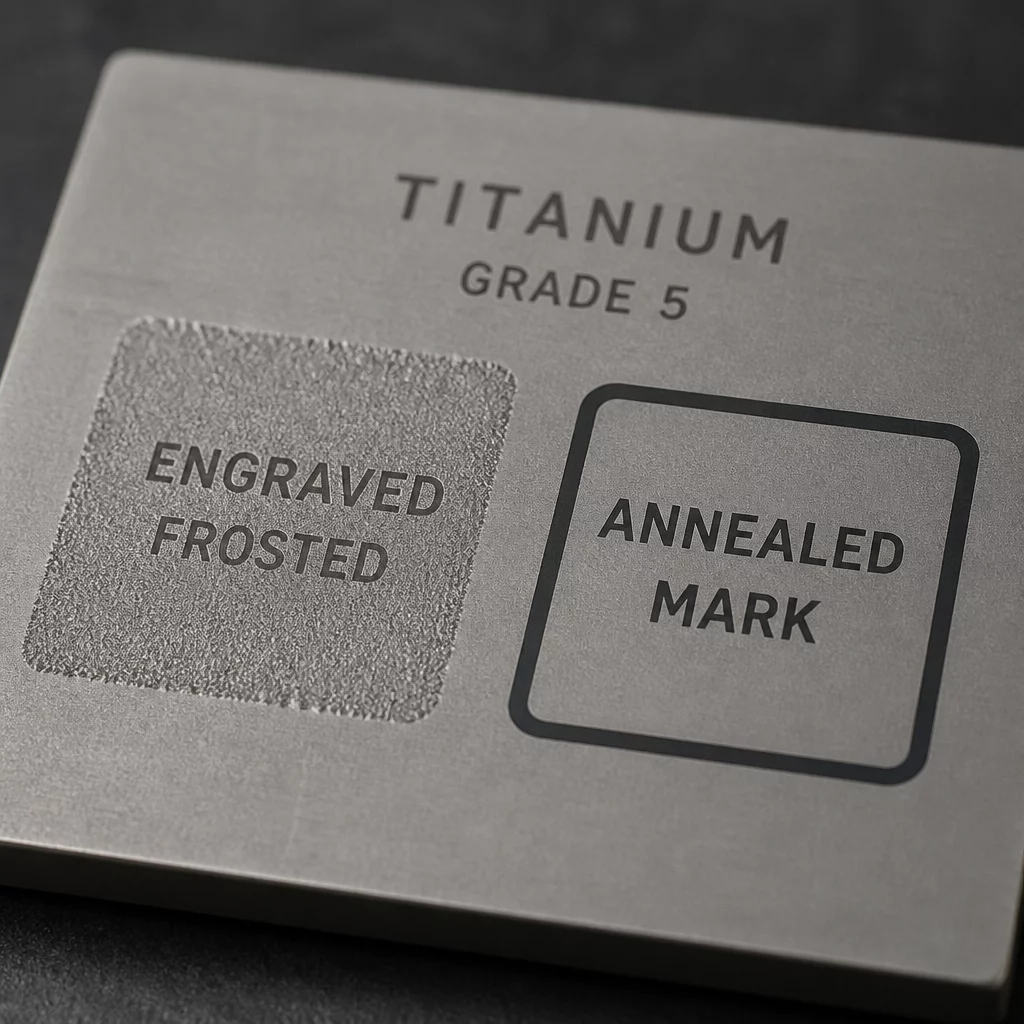
Key Differences: Etching vs. Annealing vs. Carbonization
Makers must distinguish between surface modification techniques to achieve clean, durable marks. Etching removes material to create depth and texture, while annealing heats the metal surface to create a dark, high-contrast oxide layer without physical disruption. In organic materials, carbonization creates dark marks by breaking chemical bonds. Each method requires precise configuration of speed, frequency, and raster steps.
- Fiber Lasers: Best for deep engraving and high-contrast annealing on stainless steel, brass, and aluminum.
- CO2 Lasers: Ideal for cutting and engraving organic substrates, acrylics, and coated glass surfaces.
- UV Lasers: The premium choice for high-resolution cold marking on sensitive medical plastics and silicon.
- Hybrid Workstations: Designed to combine multiple laser wavelengths for versatile, multi-material industrial demands.