Industrial Evolution of Fiber Laser Systems
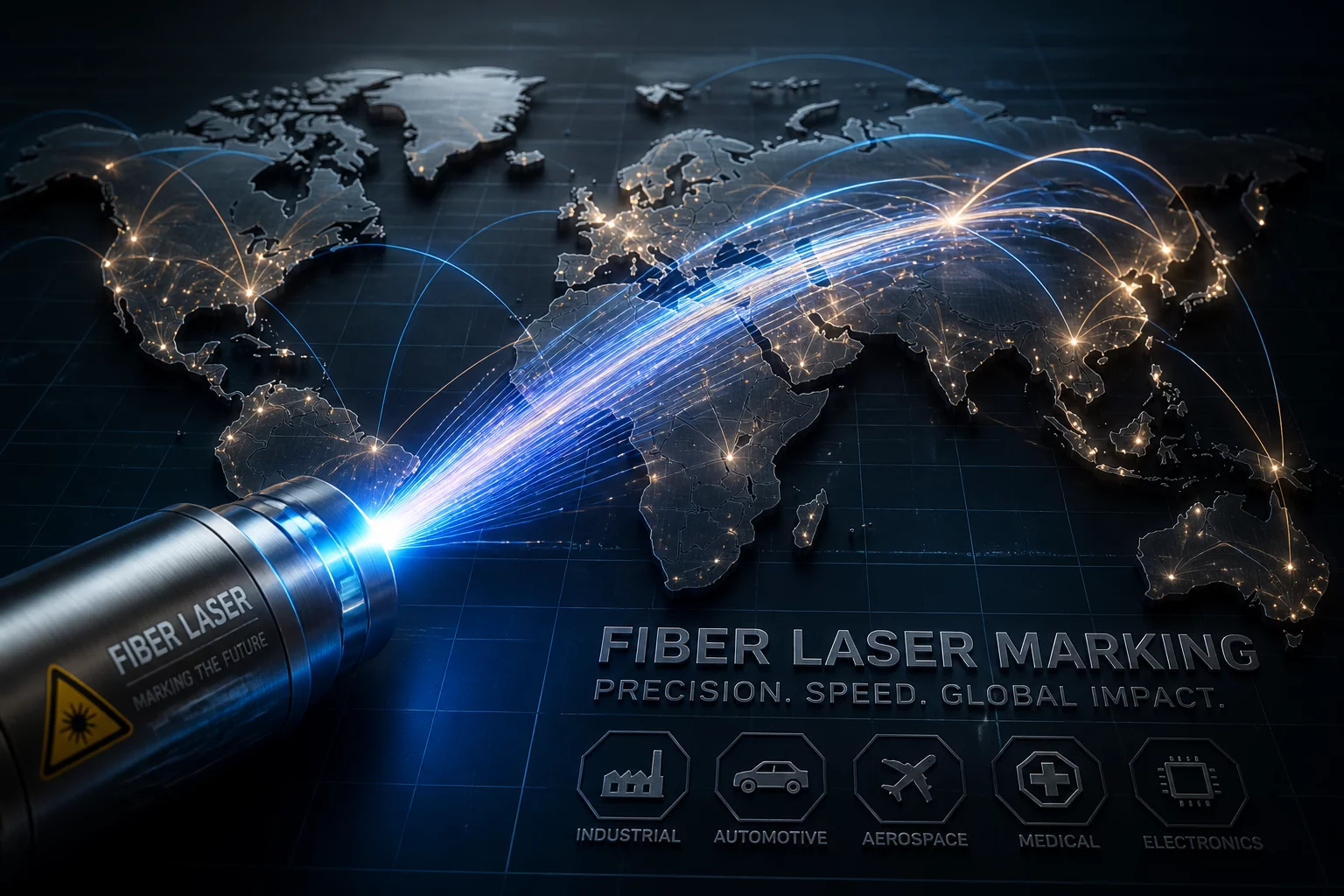
The global market for fiber laser marking has experienced exponential growth due to the demand for permanent, high-contrast traceability in manufacturing. Aerospace, automotive, and medical device industries rely heavily on fiber lasers for marking barcodes, serial numbers, and data matrices. The wavelength of 1064nm is highly absorbed by most metals and selected plastics, delivering rapid processing speeds with minimal thermal deformation. Recent shifts toward smart manufacturing require systems that integrate directly into existing ERP and automated production lines, making the software interface and precision control more critical than ever.
Key Market Trends and Integration Factors
Manufacturers look for long-term reliability and minimal maintenance when selecting laser systems. Fiber lasers lead the sector because their solid-state design eliminates consumable parts and gas refills. Key parameters to monitor include average power output, peak pulse duration, and spot size consistency. When deploying these systems, production engineers must verify compatibility with specific alloys and coatings to prevent surface corrosion or weak contrast outcomes.
- High speed galvanometers enable marking speeds up to 8000 mm/s for high-volume lines.
- Air-cooled systems eliminate the need for external water chillers in standard workshops.
- Solid-state technology ensures a operational lifespan exceeding 100,000 hours.
No comments yet. This could be your first comment.