Digital Manufacturing Small Midsized Companies
Implementing cloud-edge intelligence and modular IoT architectures to boost mid-market shop floor efficiency.
2026-08-08
BY Jessica Green
PRACTICAL CASE
1. Executive Overview
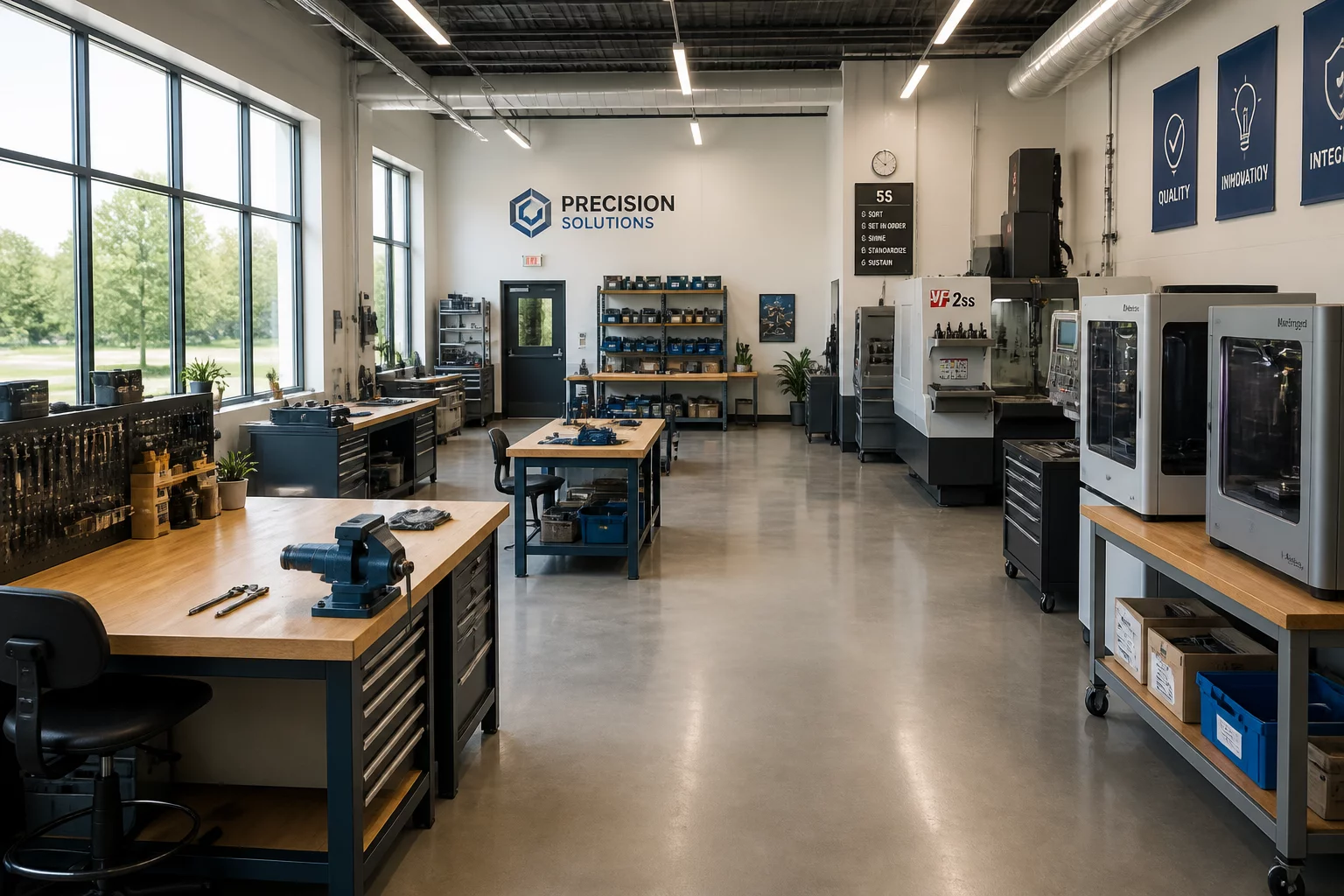
Midsized manufacturing companies face a unique operational paradigm: they must achieve the high efficiency, agility, and precision of tier-1 enterprises without the luxury of massive capital expenditures or dedicated internal software engineering teams. Digital manufacturing offers a pathway to bridge this gap. By implementing modular IoT systems, unified cloud execution models, and flexible automation platforms, smaller operations can digitize their workflow from procurement to final quality assurance. This case study analyzes how small and midsized manufacturers are deploying scalable software architectures to connect legacy workshop equipment, automate telemetry logging, and optimize cycle times, turning operational constraints into competitive advantages in an increasingly automated global market.
2. Systemic Challenges
Traditional mid-market manufacturing workflows suffer from severe data fragmentation. Legacy machines operate as localized silos, transmitting no telemetry and requiring manual operator logging which introduces transcription errors. Furthermore, legacy hardware lacks standard APIs or modern communication protocols, making integration with enterprise resource planning (ERP) systems expensive and slow. Mid-sized operations also face limited capital budgets, preventing them from completely replacing machinery. These organizations must find ways to retroactively connect existing hardware to cloud-based edge devices, solve data ingestion bottlenecks, and establish unified data models that allow real-time decision-making without disrupting daily production schedules.
3. Deployments & Solution Architectures
To address these issues, the deployed solution utilizes a hybrid cloud-edge architecture designed for rapid installation and minimal capital investment. High-performance industrial edge gateway nodes are installed on the shop floor to interface directly with legacy machines via Modbus TCP and OPC-UA. These gateways collect real-time sensor data, including temperature, spindle speed, and power cycles, and normalize it into JSON payloads. These payloads are then securely transmitted to a centralized cloud platform. The platform runs automated analytics to calculate key performance indicators, dispatch alert logs to operators via mobile interfaces, and dynamically adjust CNC feed rates. This setup provides mid-sized enterprises with real-time operational visibility previously available only to major industrial plants.
// Case Analysis Parameters
| Cycle Time Reduction: | 18.4% Average Reduction |
| Average Power Output: | 24V DC / 120W Peak Edge Gateway |
| Edge Precision Definition: | ±0.05 mm mechanical precision tracking |
| Laser Engine Class: | IoT Integrated Fiber / CO2 Controller |
| Lens Focal Length: | F-Theta Field & Telecentric Lenses |
| Dynamic Focus Axis: | Software-controlled automatic autofocus |
| Implementation Notes: | Connected via standard OPC-UA, integrated with cloud-edge dashboard for real-time monitoring. |
| Lead Engineer Assigned: | Jessica Green |
| Audit Date: | 2026-08-08 |
// Related Deployment Projects


// Telemetry Logs & Notes
NO TELEMETRY RECORDED FOR THIS CASE STUDY
Terminal input is operational below.// Leave A Case Telemetry Entry