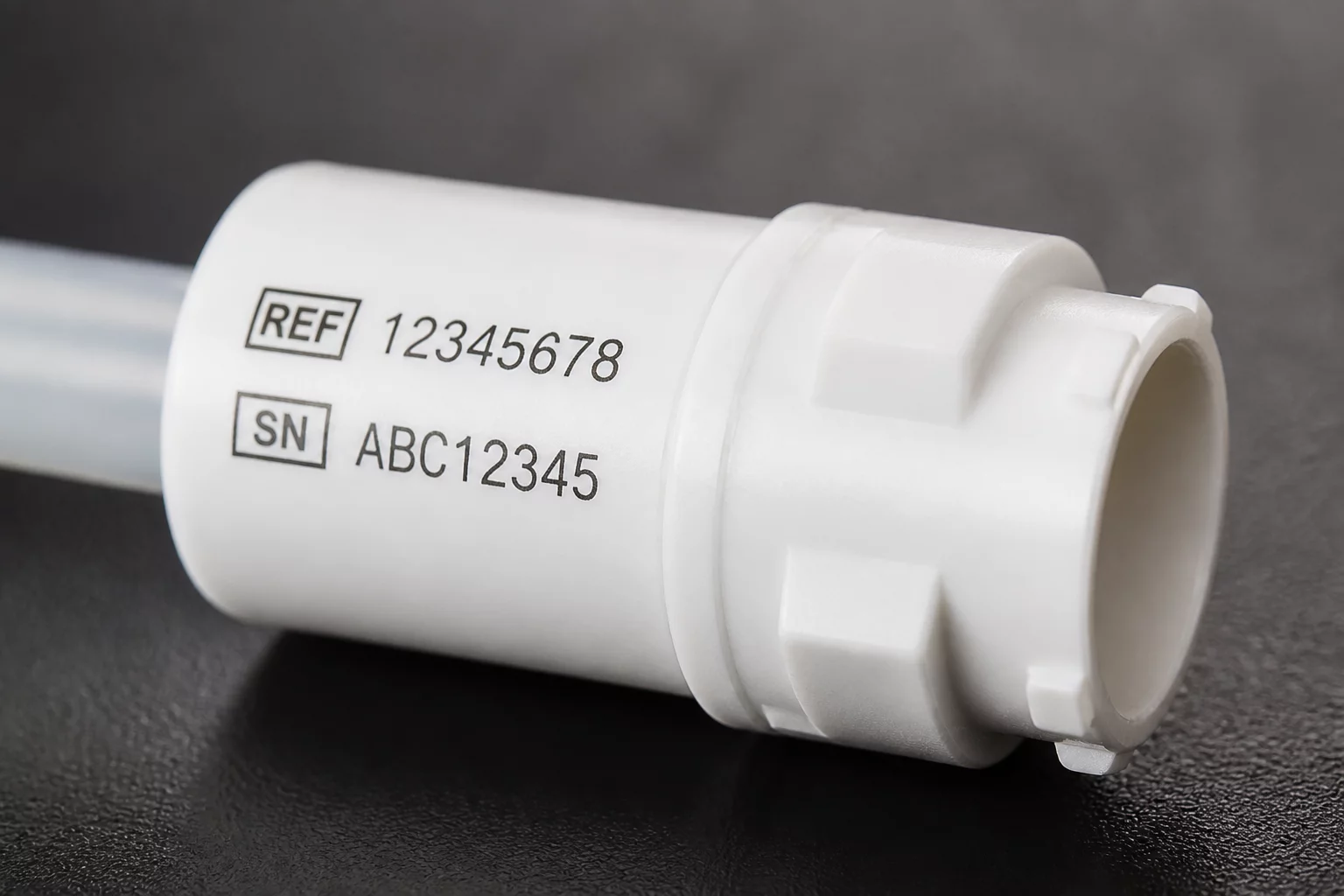
Cleaner Edges Won the Review
Edge quality, surface integrity, and scanner verification metrics guided the final decision
2026-05-12
BY MarkOutcome Team
PRACTICAL CASE
1. Executive Overview
In manufacturing environments where high throughput and repeatability are paramount, the perceived darkness of a mark is often mistaken for quality. In practice, reliable part identification and lifecycle resilience depend less on color intensity and more on edge quality, uniform stroke width, and the absence of raised burrs. This case examines two competing parameter sets: the first produced a visually bold, darker mark with heat-affected micro ridges, while the second yielded a slightly lighter but far cleaner edge profile. Over a multi-batch evaluation, the lighter, cleaner edges delivered better scan rates, fewer rework incidents, and more consistent topography when inspected under magnification.
2. Systemic Challenges
The initial process focused on maximizing contrast by increasing power density and overlapping hatch spacing. While this delivered a deeper tonal result, side effects accumulated: molten lip formation along vector edges, sporadic slag deposits in tight corners, and localized surface warping on thin sections. These artifacts degraded machine-vision performance and, in certain orientations, introduced glare that confused hand scanners. Moreover, the thermal load extended cycle time due to necessary post-pass polishing or secondary ablation intended to remove debris.
3. Comparative Results
We captured a controlled dataset across 50 parts per condition. The darker recipe produced an average scanner read confidence of 94.1% and required periodic touch-ups in 12% of parts to remove burring. The cleaner-edge recipe, configured with reduced power, higher traversal speed, and a refined hatch angle strategy, achieved a 99.3% read confidence with zero rework. Microscopy confirmed tighter stroke definition and minimal melt zones. The lighter appearance posed no functional disadvantage—human-readable alphanumerics remained legible at intended viewing distances, and DataMatrix modules exhibited sharp cell boundaries critical for robust decoding.
4. Decision Rationale
Cross-functional review prioritized throughput stability, scanner headroom, and cosmetic consistency over subjective visual boldness. The team favored the cleaner-edge outcome because it reduced the risk of downstream quality holds, simplified in-line inspection, and minimized the need for operator intervention. The approach also preserved substrate integrity on temperature-sensitive components and reduced the probability of stress concentrations at edge transitions—an essential factor for assemblies experiencing vibration or cyclical loading.
5. Implementation Notes
Transitioning from the darker to the cleaner recipe involved three core adjustments: (1) lowering power while increasing speed to limit heat input per unit area, (2) widening hatch spacing slightly while rotating hatch angles across multi-pass sequences to diffuse residual energy patterns, and (3) introducing a final high-speed, low-power skim pass to evaporate fines and smooth micro asperities. For serialized alphanumerics and 2D codes, we standardized stroke widths to maintain uniform energy coupling and specified a maximum allowable burr height measured with profilometry. These specifications are now embedded into the production traveler and LightBurn job profiles to ensure repeatability across shifts.
6. Operational Impact
Post-adoption KPIs show fewer line interruptions for rework, a measurable reduction in average cycle time per part (due to elimination of polishing steps), and improved first-pass yield on scanner gates. Customer-facing cosmetic assessments also improved, as the cleaner edge geometry projects a higher-quality perception without sacrificing the functional performance of the mark. The case illustrates a general principle: in precision marking, controlled energy distribution and edge integrity consistently outperform maximal darkness as predictors of success.