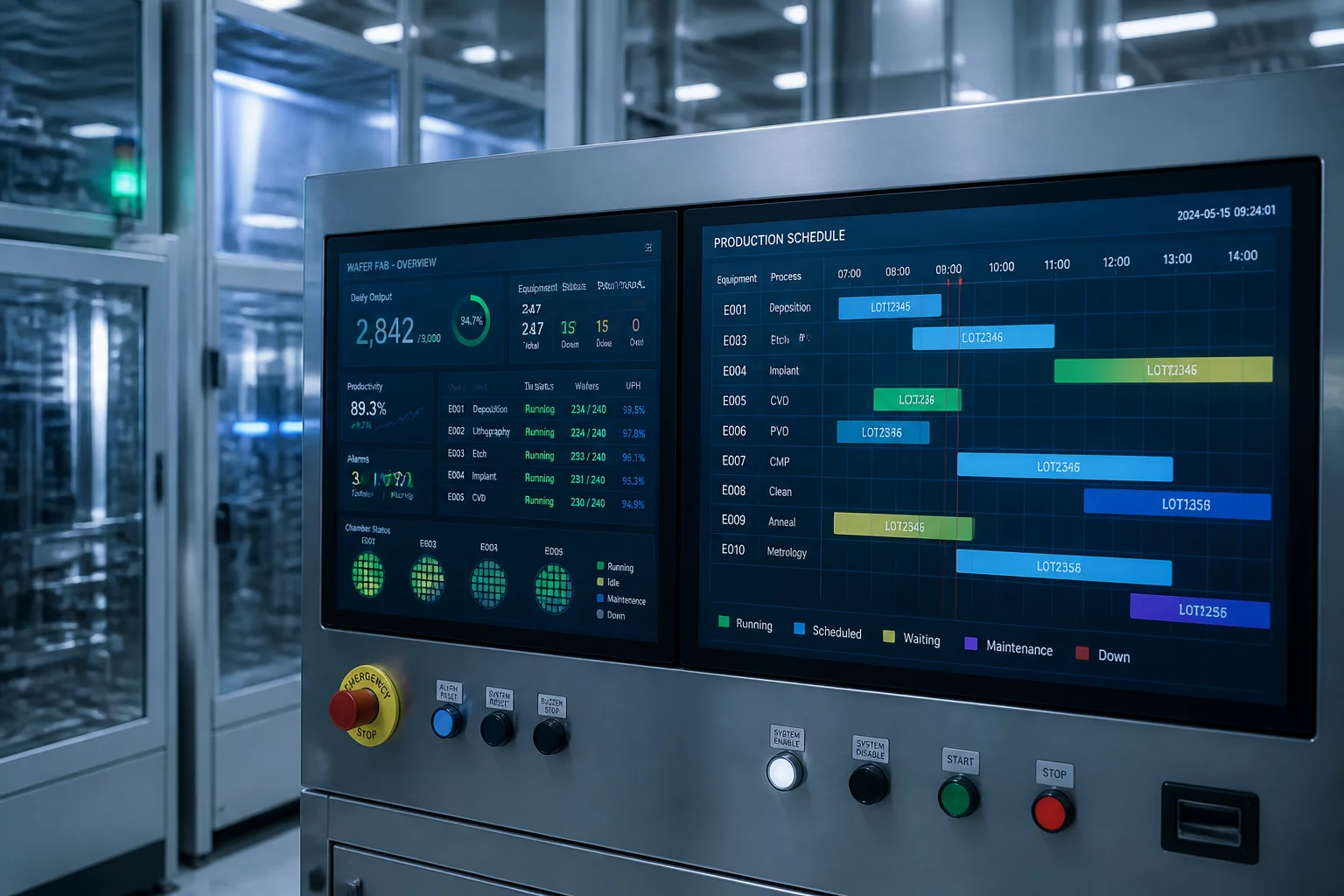
Siemens Xcelerator Platform Expansion
Optimizing Semiconductor Manufacturing Scheduling and Operations
2026-05-15
BY James Vance
PRACTICAL CASE
1. Executive Overview
The expansion of the Siemens Xcelerator platform marks a significant transition in how semiconductor manufacturers orchestrate cleanroom scheduling and tool allocation. In high-mix, low-volume semiconductor fabrication plants, traditional dispatching algorithms often struggle to adapt to sudden changes in tool availability, chemical vapor deposition cycle deviations, or priority wafer lot overrides. By integrating real-time telemetry with cloud-hosted optimization engines, this platform expansion bridges the gap between enterprise-level production schedules and localized shop-floor execution. We examine how this digital transformation framework enables engineers to run predictive simulations on the fly, ensuring that bottlenecks are neutralized before they disrupt the production flow.
2. Systemic Challenges
Prior to deploying this platform upgrade, the facility faced chronic inefficiencies in lithography and etching queue coordination. Photoresist degradation windows require strict scheduling discipline; if a silicon wafer lot sits too long in the queue before exposure, it must be stripped and reworked, introducing major cycle-time penalties. Existing legacy systems suffered from data silos, where the scheduling software had no direct visibility into live tool health or dynamic vacuum chamber calibration states. This disconnect led to frequent scheduling mismatches, where high-priority wafer lots were routed to tools that were undergoing unannounced self-calibration or experiencing minor pressure deviations.
3. Deployments & Solution Architectures
To resolve these bottlenecks, the engineering team deployed a unified IoT architecture linking edge controller nodes to the Siemens Xcelerator cloud core. High-resolution sensors were installed directly on the physical gas flow controllers and vacuum chambers to stream telemetry at sub-second intervals. These data streams feed directly into a local digital twin model, which calculates real-time wear-and-tear metrics and dynamic processing capacities. When the scheduling engine calculates the optimal path for an incoming batch of wafers, it queries this live digital twin instead of relying on static, pre-determined lookup tables. As a result, the plant now dynamically adjusts wafer routing based on actual tool performance, preventing bottleneck accumulation at key process gates.
// Case Analysis Parameters
| Cycle Time Reduction: | 14.2% Average Reduction |
| Average Power Output: | 12.5 kW Nominal Output |
| Edge Precision Definition: | Sub-micron level (<0.8µm)< /td> |
| Laser Engine Class: | Class IV Semiconductor Laser System |
| Lens Focal Length: | F-Theta Scan Lens 160mm |
| Dynamic Focus Axis: | 3D Dynamic Focus Control Axis |
| Implementation Notes: | Successful deployment completed in Q2 2026. Fully integrated with cloud execution layers. |
| Lead Engineer Assigned: | James Vance |
| Audit Date: | 2026-05-15 |
// Related Deployment Projects

// Telemetry Logs & Notes
NO TELEMETRY RECORDED FOR THIS CASE STUDY
Terminal input is operational below.// Leave A Case Telemetry Entry