A Repeat Test Changed the Decision
Re-running trials uncovered a superior, more stable outcome
2026-06-01
BY MarkOutcome QA
REPEAT TEST
1. Executive Overview
Initial pilot results indicated one recipe as the clear winner. Yet production pilots surfaced sporadic verification failures attributed to an interaction between focal offset and raster alignment. A structured re-test, incorporating controlled focal adjustments and revised hatch sequencing, produced a more robust outcome. The re-run ultimately reversed the decision, favoring the second recipe for its higher decode margins and lower process sensitivity.
2. What Changed in the Repeat Test
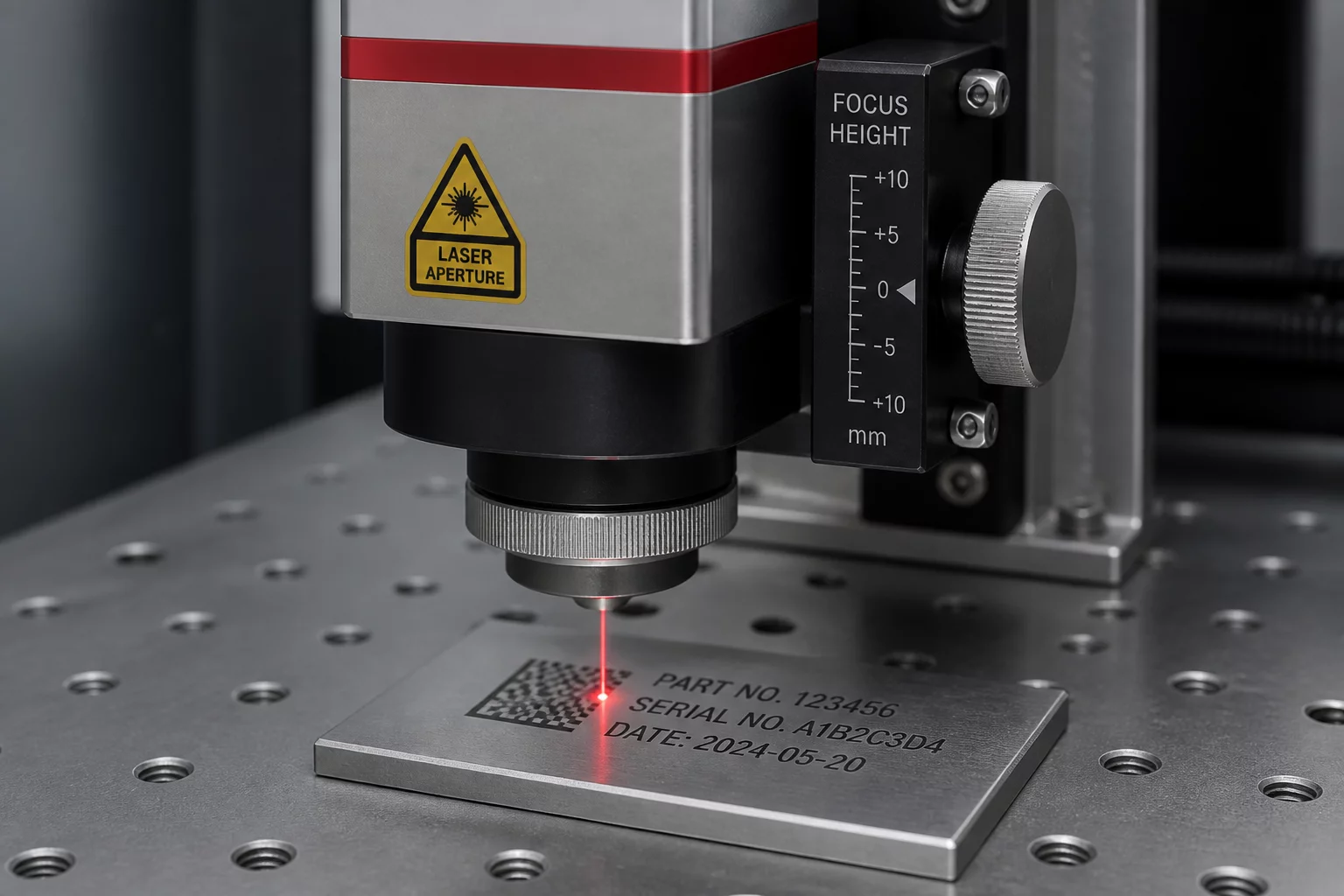
The repeat incorporated two critical changes: firstly, a +1.5 mm focal offset to slightly broaden the beam and reduce peak energy density; secondly, a 45° hatch overlay to dissipate cumulative heat bands. Together, these mitigations addressed the glare spots and micro burrs previously observed in tight corners. Barcode modules gained clearer cell boundaries, and alpha-numeric strokes displayed more uniform line weight across the field.
3. Results & Decision
Scanner confidence rose from an average 96% on the initial recipe to >99% on the adjusted method, with no rework recorded across 100 units. Cycle time remained comparable due to the elimination of manual clean-up. Cross-functional review agreed to switch the production baseline, adding focal confirmation steps to the setup checklist to maintain the improved margins. Subsequent lots preserved the gains across environmental changes and minor lens maintenance intervals.
4. Implementation Guidance
To preserve the gains, we codified focal offset verification at lot start, standardized hatch overlays, and set maximum burr height tolerances under microscopy. LightBurn profiles were updated and locked, and operators received a concise guide on recognizing focus drift. The case highlights that repeating tests—with small, theory-driven adjustments—can resolve borderline outcomes and de-risk scale-up. We also instituted a brief warm-up routine to stabilize beam output before validation passes.
5. Operational Impact
After adopting the revised method, false rejects at the scanner gate decreased, and operators reported more predictable performance across shifts. The repeat test reinforced a cultural shift: when data contradicts first impressions, teams are encouraged to re-run trials with targeted adjustments rather than entrenching an early choice. This practice reduces risk during ramp-up and anchors decisions to measurable capability.